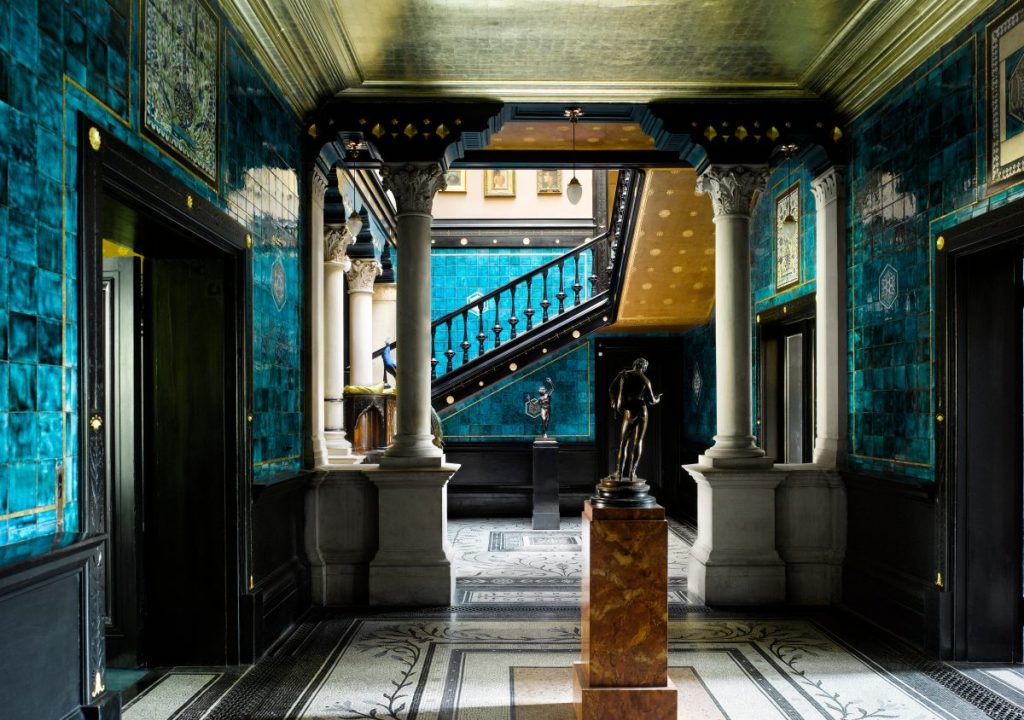
In the late nineteenth century, a unique community of artists’ studio-houses grew around Holland Park and specifically its epicenter, Frederic Leighton’s House. Many of these artists rose to the height of their talent, were featured in many exhibitions around London, and became celebrities. These included artists William Holman Hunt, Valentine Cameron Prinsep, and G.F.Watts among many others. Blue plaques continue to adorn some of these legendary houses in the adjacent streets around Leighton House.
These artistic developments and creative outburst are the subject of an exhibition at the recently-reopened Leighton House. Over the past two years Leighton House has expanded its collection of new acquisitions by the Holland Park Circle of artists, acquiring paintings by James Jebusa Shannon, Colin Hunter and Albert Moore.
The remarkable studio-house of Victorian artist and former President of the Royal Academy, Frederic, Lord Leighton reopened last year following a major and stunning transformation. The beautiful house and its garden were closed for many years. It’s a jewel in the middle of the chic Holland Park area of London.
“It is apparent that in Leighton House there is a stronger relationship between the occupant’s desires and those of the architect than we would normally find in a client/architect relationship. This explains why architecturally the building is not particularly noteworthy, but the oddities of the plan and what it suggests about the occupant are fascinating.” Will Alsop RA wrote about this amazing place.
Other highlights include, of course, paintings by Leighton himself. The new Tavolozza Drawings Gallery downstairs showcases a selection of the most beautiful drawings by Frederic Leighton, most of them rarely seen before.
Leighton preserved hundreds of his drawings in his own archives and they became lifelong sources of inspiration that he returned to over and over again. After the artist’s death in 1896, his close friend and neighbour, Emilie Barrington, gathered as many of his drawings as possible for the public collection she helped preserve Leighton House. Barrington believed that Leighton’s drawings displayed his sheer artistic talent even more plainly than his finished paintings, and saw them as the most spontaneous, expressive, and vivid representations of his artistic ideas. As she wrote, Leighton’s drawings were more than mere sketches; rather, they were “the spirit itself of the picture.”
These remarkable works are featured in the downstairs gallery of Leighton House and are must-sees. The details of the portraits and draping depicted on paper are absolutely marvelous and showcase Leighton’s incredible talent.
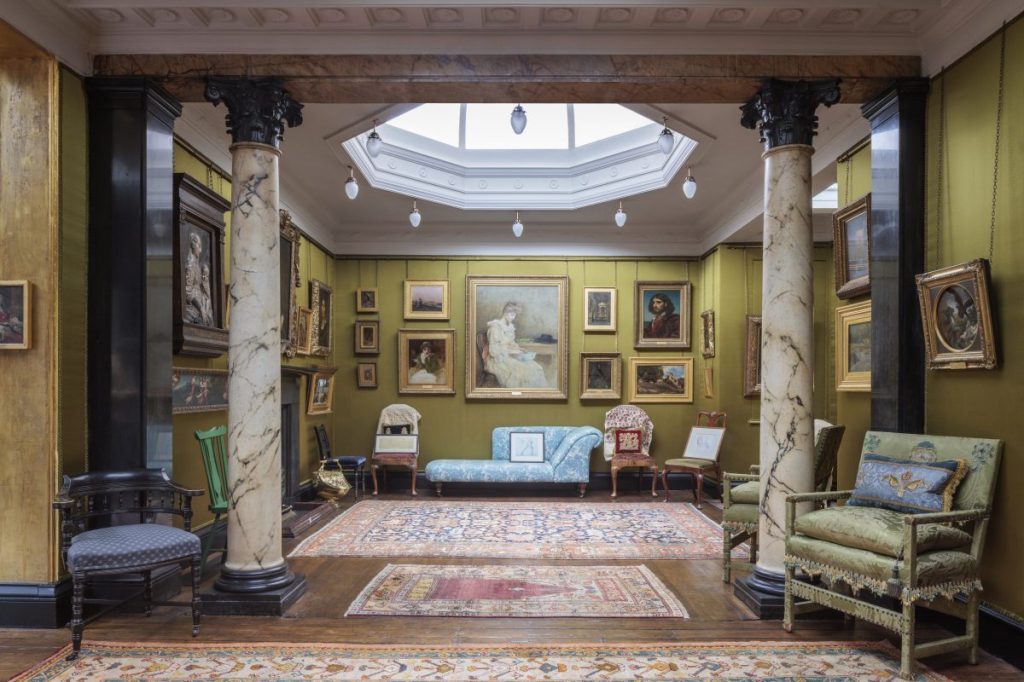
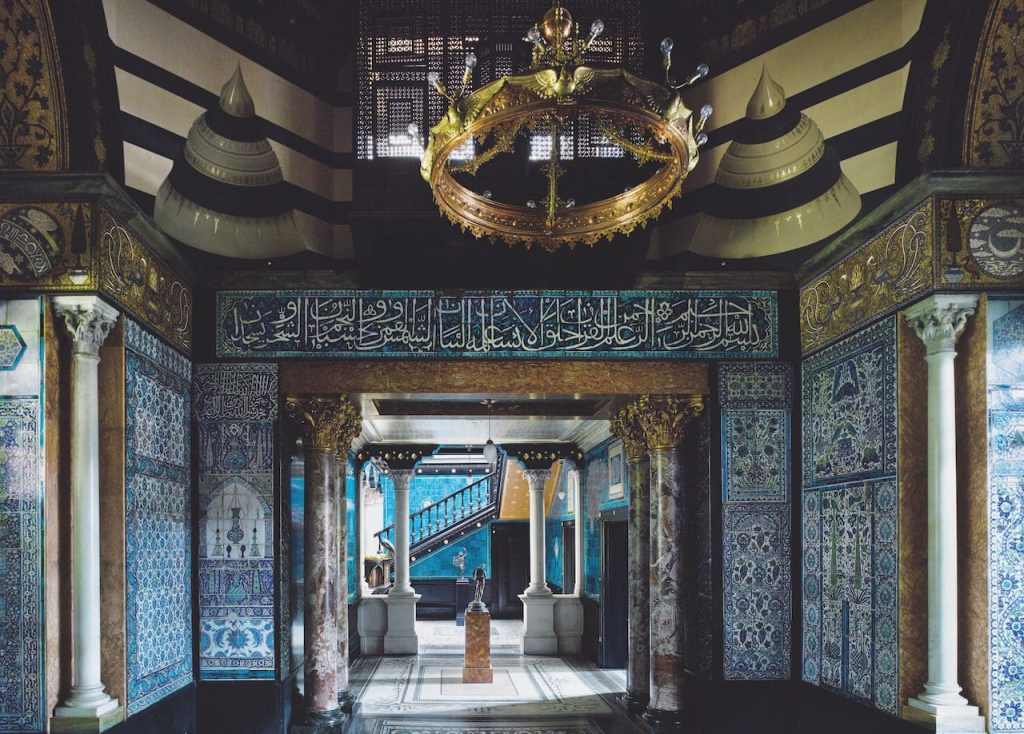
Leighton House is famed for its original and majestic design, furniture, art collection, objects and books displayed throughout the house. The extraordinary Arab Hall takes centre stage on the ground floor as it features stunning mosaic floors, fountains, vases and tiles acquired through Leighton’s travels to Turkey, Egypt and Syria.
The project has focused on the twentieth-century additions made in a new wing at the east end of the original house. This has been completely refurbished to reveal previously unseen historic features for the very first time alongside new gallery spaces, a café, and an great exhibition programme focused on Leighton’s practice as a painter, sculptor and public figure, and the wider artistic community.
A series of commissions that respond to the iconic interiors of the historic house and continue the the property’s conversation with modern artists and craftsmanship from the Middle East and North Africa feature. Oneness, the first contemporary artwork on permanent display at the museum, is an 11-metre-high mural hand-painted by the Iranian artist Shahrzad Ghaffari, which envelopes the curved walls of a new helical staircase across three floors. A suite of specially commissioned furniture handmade by displaced Syrian artisans based in Amman, Jordan, is also presented in the new spaces alongside archival cabinets and educational videos.
The juxtaposition between contemporary works with Leighton’s own work and collection, bring the property to new heights.
For further discoveries of this vibrant era, The Tower House, built and designed by William Burges, owned today by none other than Led Zeppelin’s founder and superstar Jimmy Page, an enthusiast of Burges and for the Pre-Raphaelite, is a two-minute walk.
–
 ART IS ALIVE