Catalonia is a wonderful region which has a lot more than Barcelona. The Triangle of Salvador Dalí venues is worth the visit to this great part of the world.
Featuring three museum spaces managed by the Fundació Gala-Salvador Dalí, this amazing trail includes the Dalí Theatre-Museum in Figueres, oeuvre d’art totale where Dalí himself is buried, the Salvador Dalí House-Museum in the picturesque village of Portlligat, paradise on earth, and the Gala Dalí Castle in Púbol where Dalí spent the last few years of his life. These places are very distinctive and offer unique insights into the artist’s oeuvre.
The geometrical figure formed by Púbol, Portlligat and Figueres tells the story of the artist and his wife Gala, through these stunning spaces, landscapes, light, architecture, skylines, gastronomy and wines, fundamental to visitors who want to understand the life and inspiration of Dalí.
The Fundació Gala-Salvador Dalí was founded in 1983 to secure Salvador Dalí’s legacy. Today its core mission is to promote, foster, disseminate, and preserve the artistic and cultural heritage of the artist. It also ensures that the artist’s rights are protected worldwide. It is thanks to the Foundation that visitors have access to this amazing exhibition places. Salvador Dalí’s documentary collection comprising a library and the photographic archive, is remarkable too.
“In this privileged place the real and the sublime almost meet. My mystical paradise starts on the plains of the Empordà, surrounded by the Les Alberes hills, and reaches plenitude in Cadaqués Bay. This landscape is my ongoing inspiration.” Dalí declared about the region he grew up and always returned to.
The Dalí Theatre-Museum in Figueres stands as a unique experience to enjoy and learn more on the work of Dalí. It’s spectacular! It features the largest collection of works tracing the artist’s life from his beginning to his death through masterpieces and Surrealist architecture. Eggs and sacred bread sculptures feature on the vibrant museum facade, welcoming millions of visitors a year.
More than 1,500 pieces embracing all media such as painting, drawing, sculpture, engraving, installation, hologram, stereoscopy, photography, are on permanent display at the Dalí Theatre Museum, as well as works by other artists he liked or that belonged to his collection. They include the works of two artists in particular: Antoni Pitxot, whom Dalí personally appointed Director of the Theatre-Museum, and Evarist Vallès. A strong programme of temporary exhibitions is worth paying attention to, re-intrepreting his work and bringing new meaning to specific pieces.
Highlights by Dalí include The Spectre of Sex-Appeal, painted in 1934, Galarina, 1945, Atomic Leda, from 1949, among many other impressive rooms such as the Mae West installation. Also important is Dalí Jewels, a rare collection of amazing jewels designed by the master. This adjacent micro-museum has the most beautiful works on view.
“I want my museum to be like a single block, a maze, a great surrealist object. It will be an absolutely theatrical museum. People who come to see it will leave with the feeling of having had a theatrical dream.” Dalí said. It is indeed theatrical and grand!
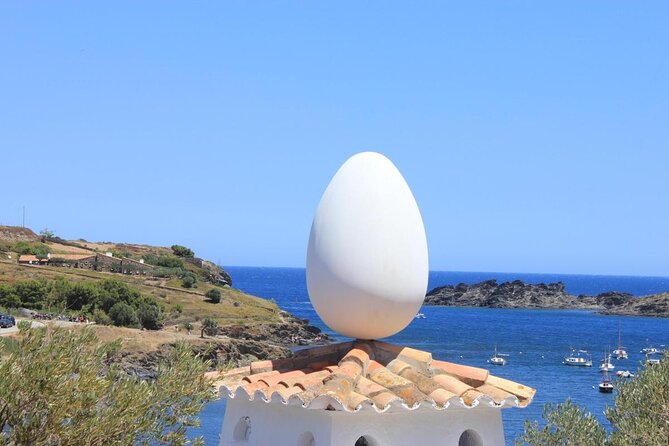
A visit to the Salvador Dalí House-Museum in Portlligat is a must, as it uncovers more aspects of his private life. The House-Museum is located in the beautiful Portlligat bay, just to the north of the town of Cadaqués, where the painter’s father was born and where he himself had spent long seasons as a child. The landscape of his dreams is there. The particular geology of Cape Creus was a major source of fantasy and inspiration for the painter.
The Portlligat house was conceived as an artwork by Dalí. It remained his only residence, the place he most often lived in, six or seven months a year. Gala and Salvador Dalí set up home in Portlligat during the spring of 1930, buying a simple fisherman’s cabin. In 1930 their Portlligat home was an incipient urban structure made up of some twenty cabins, aligned on either side of a small stream, an isolated and solitary place. Right from the outset, the green and grey of the landscape and of the olive trees, the basic rural constructions, the rocky coast and the water of the small bay became constant themes in Dalí’s paintings.
By 1932 the house was made up of two cabins and a small house, and in 1935 Dalí and Gala undertook the first refurbishment and a sizable extension. When Gala and Salvador Dalí returned from the United States in the summer of 1948, following an absence of twelve years, they took the decision to make Portlligat their definitive place of residence.
Dalí needed a space to work, but also store objects and artworks he had accumulated in his tremendous life. From then on, the house grew constantly, with new constructions and the addition of further cabins, so as to adapt to Dalí’s new needs, particularly for structuring a workspace to accomodate the formats and complexity of his work. The studio, library and bedroom were built, while the 1960s saw completion of the oval room, the courtyard, the summer dining-room and the swimming pool, which was completed in the summer of 1971. A place that hosted some of the wonderful parties with Amanda Lear.
The result of the successive extensions and changes is a labyrinthine structure – similar to Figueres. The various areas are decorated with fantastic items: carpets, pictures, stuffed animals, artworks, tapestries, and antique furniture instilling a magical atmosphere.
“I have constructed myself on these stones: here, I have created my personality, discovered my love, painted my work, built my house. I am inseparable from this sky, from this sea, from these rocks, linked forever to Portlligat.”
Salvador Dalí died in 1989, leaving an artistic legacy. His works are housed in private collections, museums worldwide, including the Salvador Dalí Museum in Cleveland, Ohio and St. Petersburg, Florida.
–
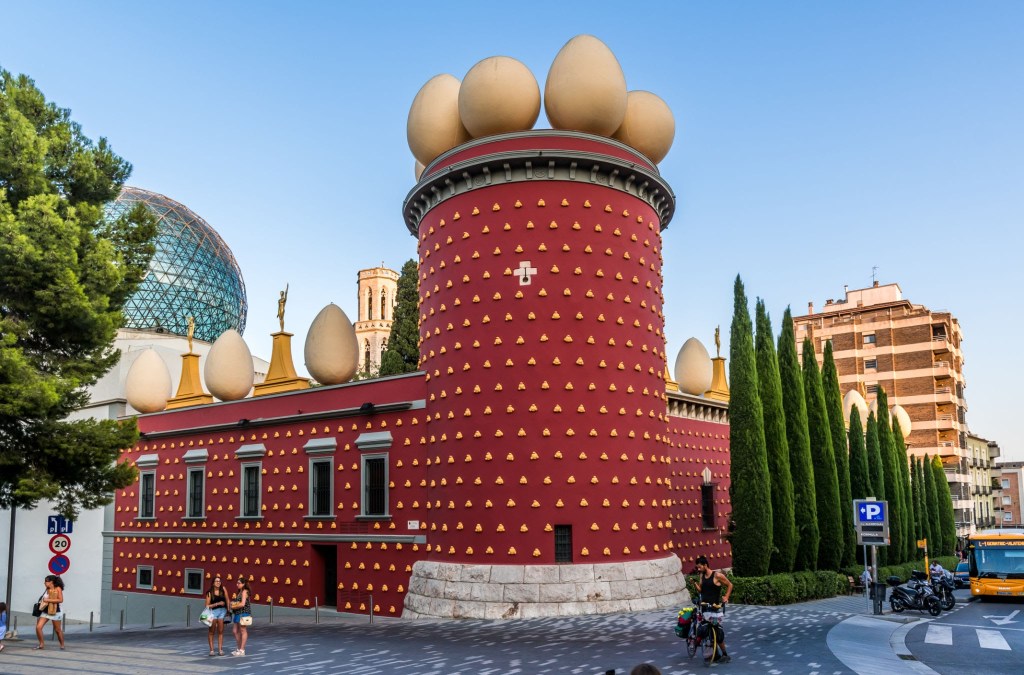
Figueres, Spain – August 28th, 2019: Dali Museum in Figueres, Spain. Museum was opened on September 28, 1974 and houses largest collection of works by Salvador Dali. Special events in August 2019 and 2020: Dali by night.

 ART IS ALIVE