Together with his aunt Rose Raymond, Yves Klein made several visits to the monastery of Cascia, a lovely Italian town, where Sainte Rita, the protector of desperate causes lived. In 1961, the French artist anonymously deposited an artwork in the venue as an ex-voto to thank the Saint. Forgotten for many years, the artwork was rediscovered after an earthquake in the Cascia area in 1979. Klein died in 1962. A restorer who came to work on the stained glass window of the monastery envisaged recycling the gold leaf and lingots contained in the box. The set was then authenticated in 1980 by art critic and friends of Klein’s, Pierre Restany, uncovering this wonderful story.
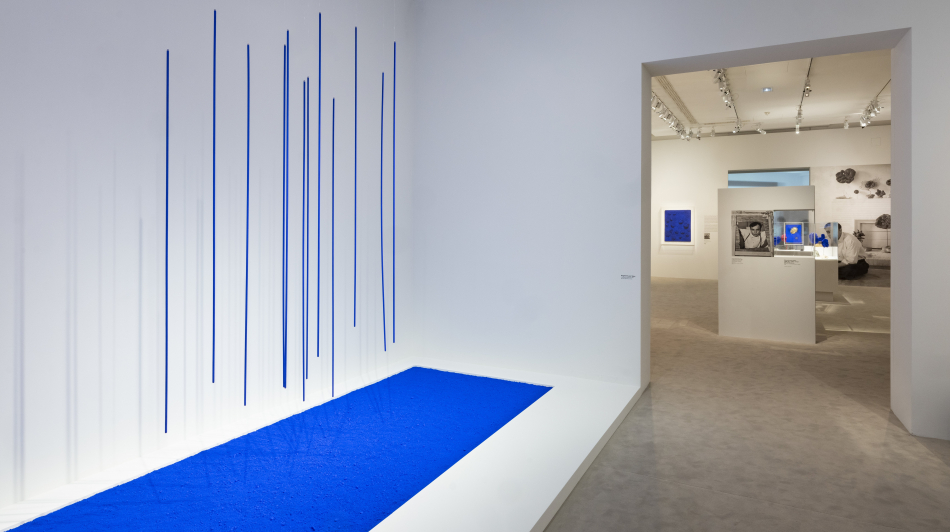
This gesture, often considered as a performative act, embodies Klein’s interest in spirituality and religion explored in a fantastic exhibition presented in Aix-en-Provence, in the South of France until March 2023. The Hotel de Caumont, a wonderfully-restored location with garden and café, currently features sixty installations, sculptures, drawings and works on paper by the inventor of International Klein Blue including this ex-voto work.
This fascinating exhibition is presented thanks to the Klein Archives and mixes works with personal images, preparatory works, and films. Highlights of the show, include a section dedicated to his friendships with many other artists including Arman, diving into the artist’s private life, a rarely examined aspect of Klein’s life.
A leader of New Realism, Klein signed a Declaration document in 1960, which detailed the key principles of this new artistic and pioneering art movement. Other artists and friends signed it such as Arman, Martial Raysse and Jean Tinguely, all on view in the exhibition too. The show brilliantly contexualises the creative links with Klein’s career and intelligently demonstrates the philosophy shared by this artistic network of thinkers, painters and writers.
By focusing on the artist’s family roots too and circles of friends, his studios, and his relations with his models through his Anthropométries for example (an entire room is dedicated to his performances through a film, the music that accompanied the event and resulting paintings), Yves Klein: Intimate showcases Klein’s intellectual process, his spiritual side, and the humour often underlying the apparent serious of his approach (the room devoted to his sky rocket is amazing). A fan of judo, the exhibition also presents a wonderful film and wall on his interest for the Japanese martial sport.
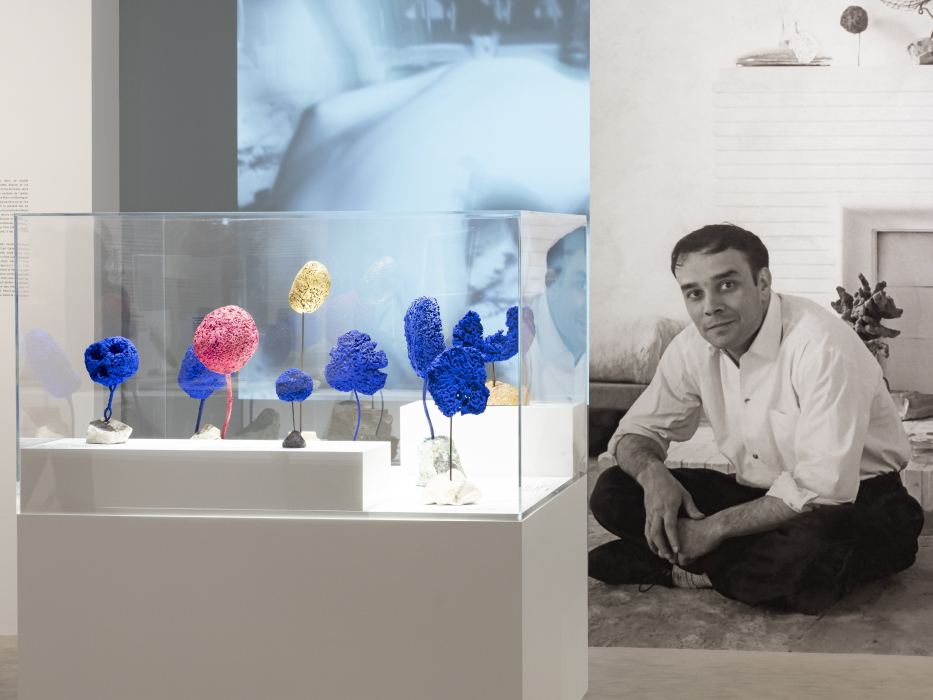
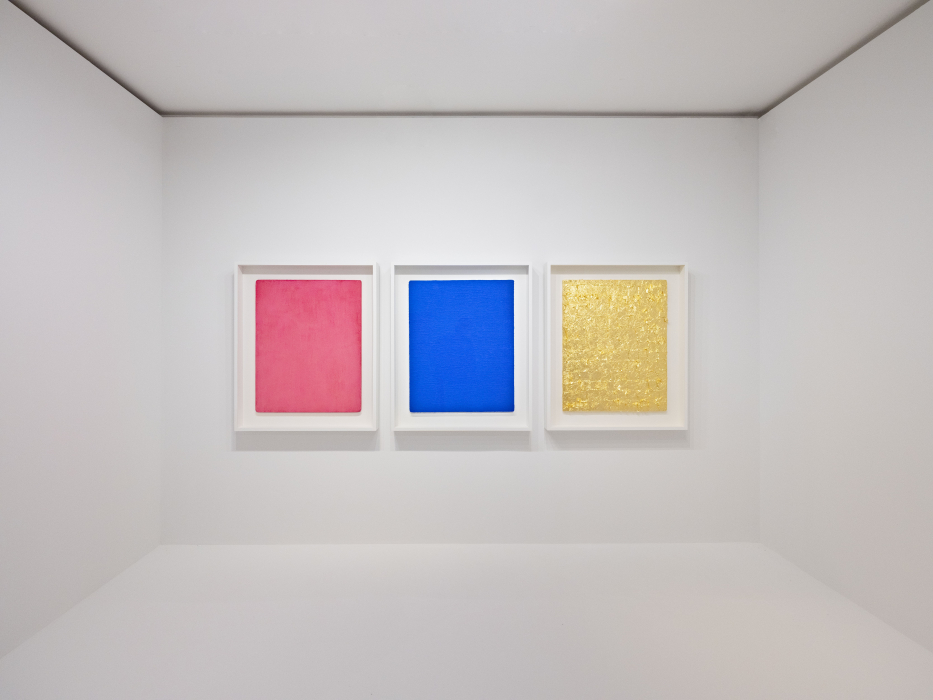
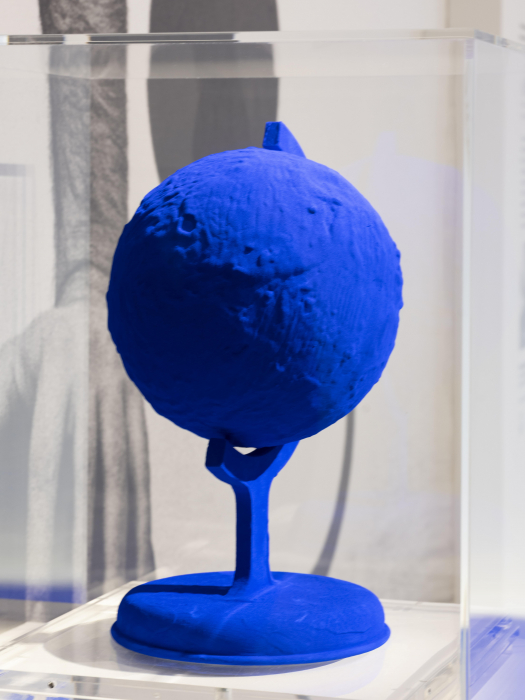
Alongside the most iconic works, including the Monochrome and Sculpture Éponge (Sponge Sculpture) featured in a large cabinet and what is one of the most stunning presentations, the gilded Monogold paintings, and Peintures de Feu (Fire Paintings) are also there. Yves Klein: Intimate stages previously unseen archival material and objects from his studio, making it easy for visitors to understand his short yet prolific oeuvre.
A luminary of the post-war avant-garde, Yves Klein left behind an impressive body of work that broke new ground and blended traditional artistic media with performance and spiritual exploration. His life and work are respectfully understood and translated in the exhibition.
The Hôtel de Caumont, in itself is worth a visit, including for the amazing Cezanne short film by the entrance. The beautiful hotel particulier is located in the Mazarin neighbourhood, the southern and aristocratic part of Aix-en-Provence. Demonstrating Parisian influences, the Hôtel de Caumont is a mansion built “between courtyard and garden”; an architectural design that appeared in Paris in the 16th century, a château and its park on an urban scale. Four encapsulate this definition: the ornate gate, the courtyard, the main building and the garden.
–

Images: © Culturespaces / Thomas Garnier – © Succession Yves Klein c/o ADAGP, Paris, 2022
 ART IS ALIVE